
INTO THE CRATER
Cold War Veterans Memorial
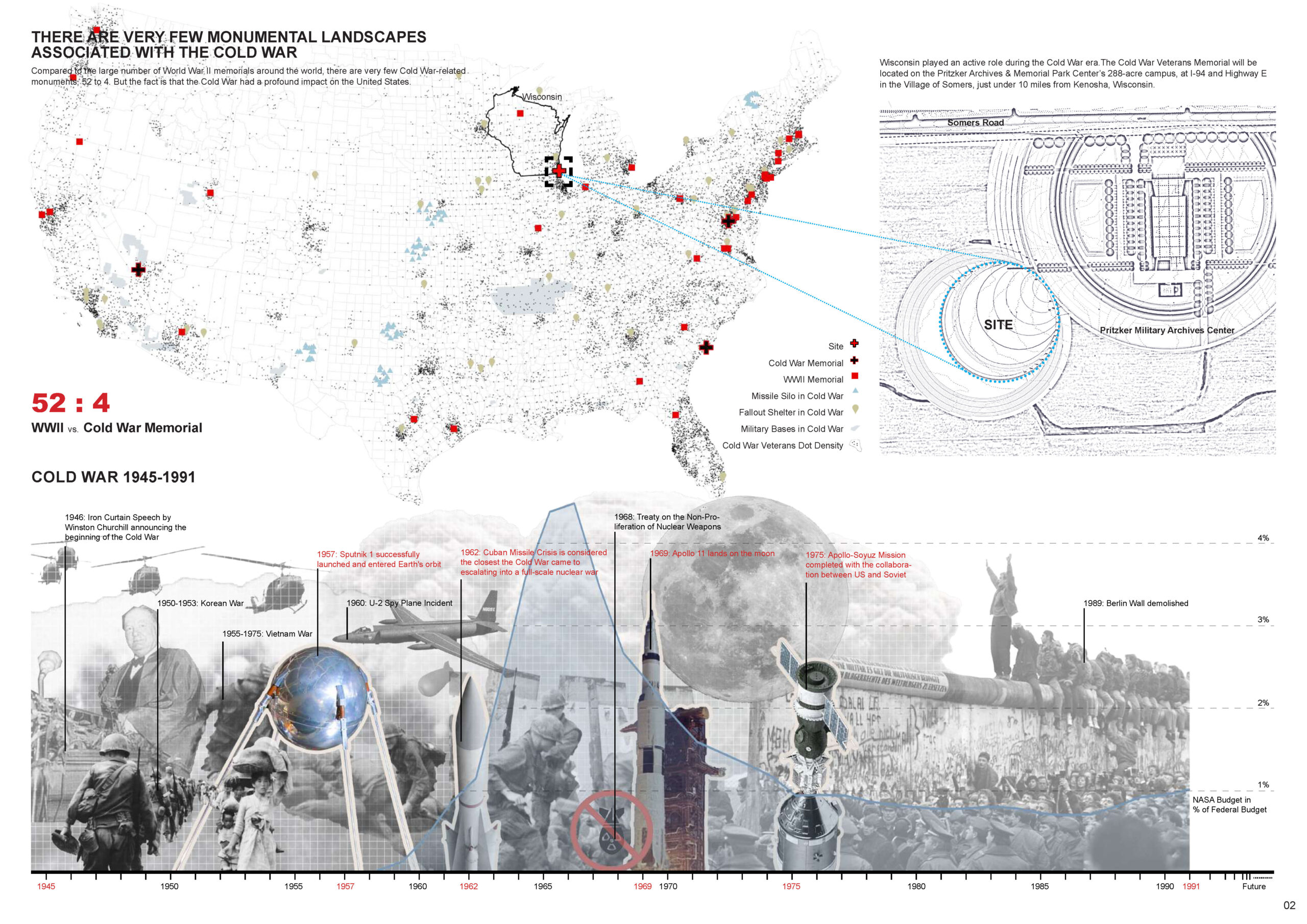
When the decades-long Cold War left such profound traces on the landscape and in collective memory, it remains surprisingly underrepresented in public memorials. Societies often favor memorials commemorating “hot wars,” while overlooking the Cold War, despite the fact that it also generated fear, tension, and potential catastrophe.
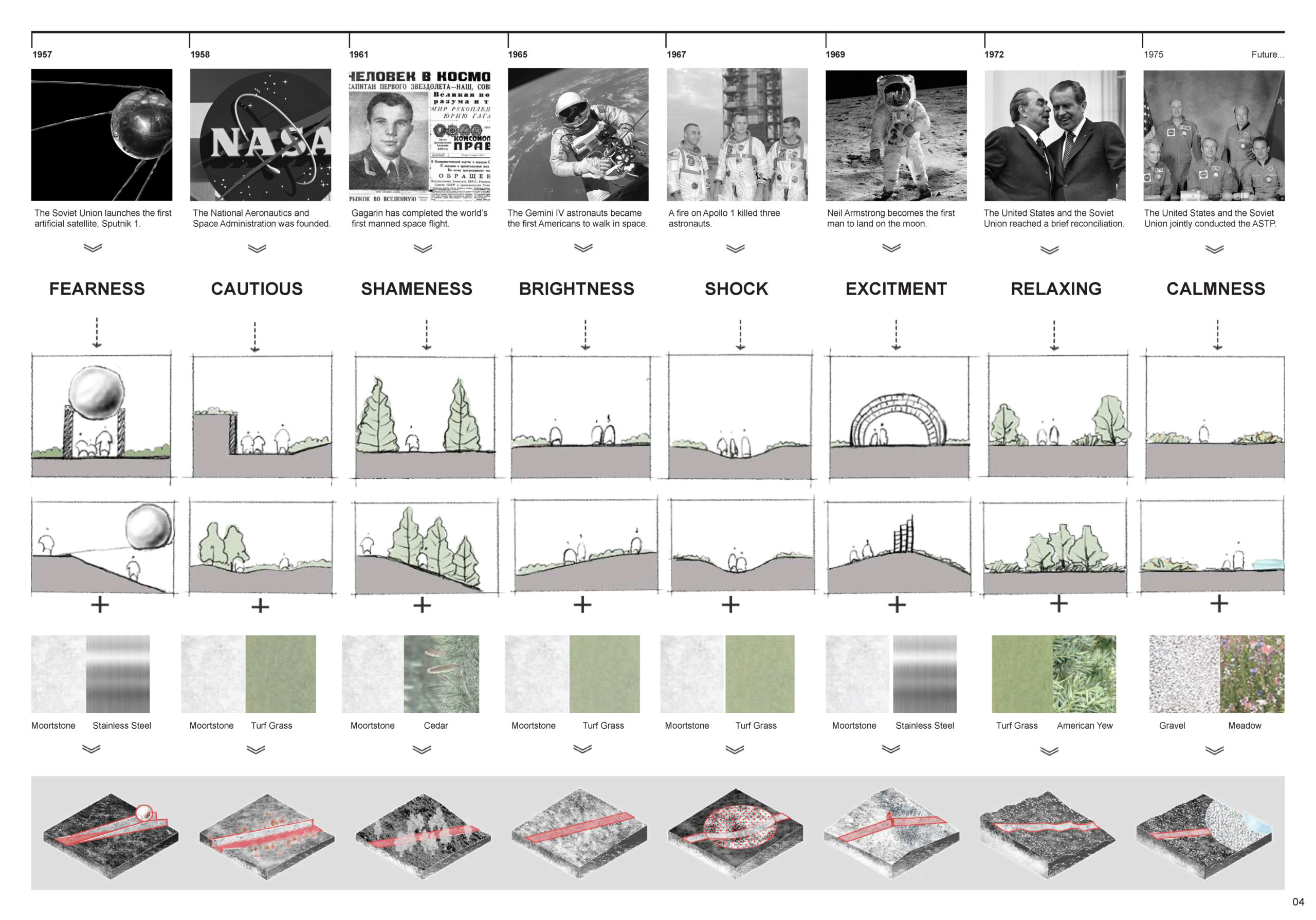
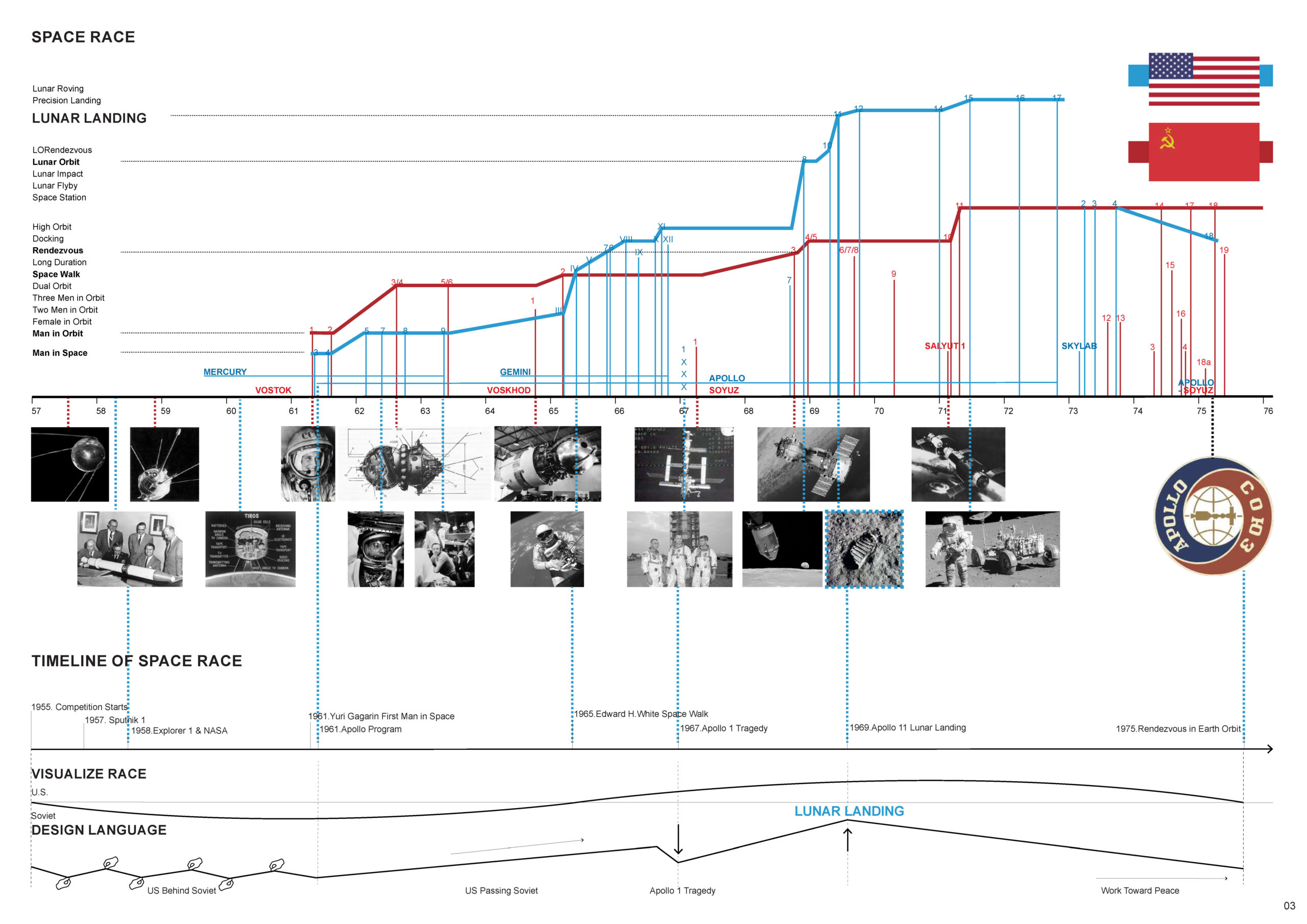
By reviewing the historical timeline of the Cold War, we chose to focus on the Space Race—an extension of the nuclear arms race that ultimately had a far greater impact on contemporary life than its original geopolitical intentions.
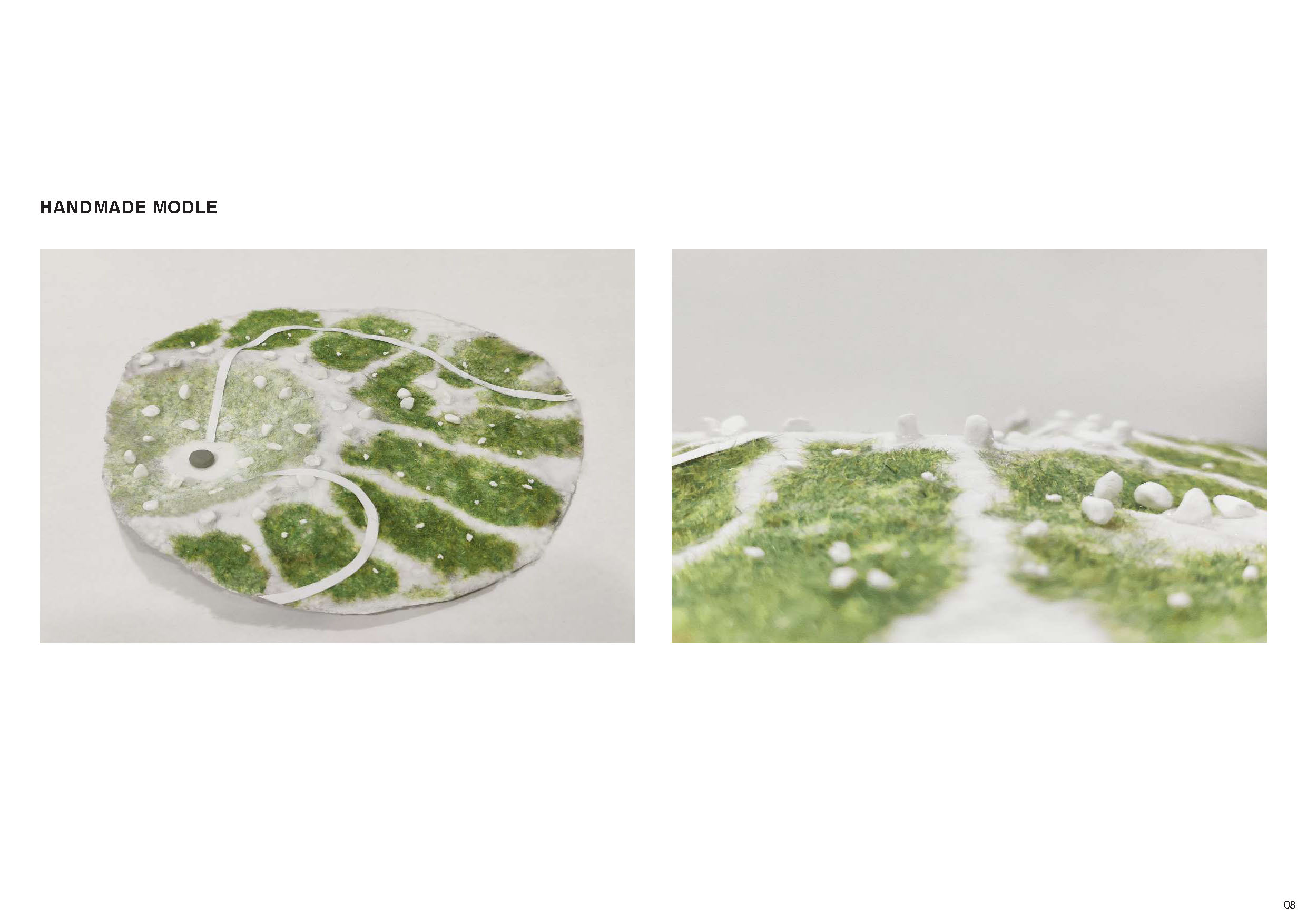
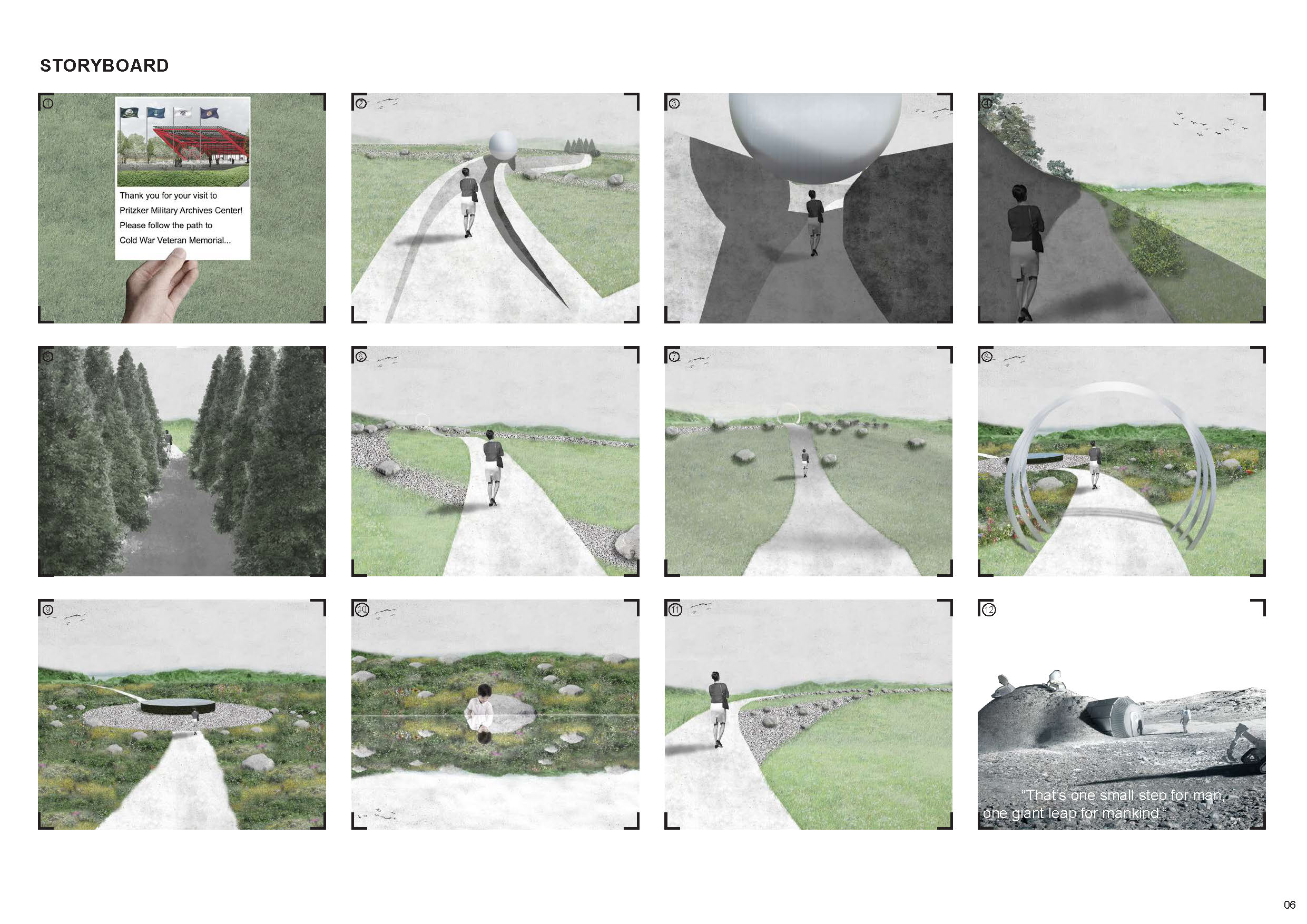
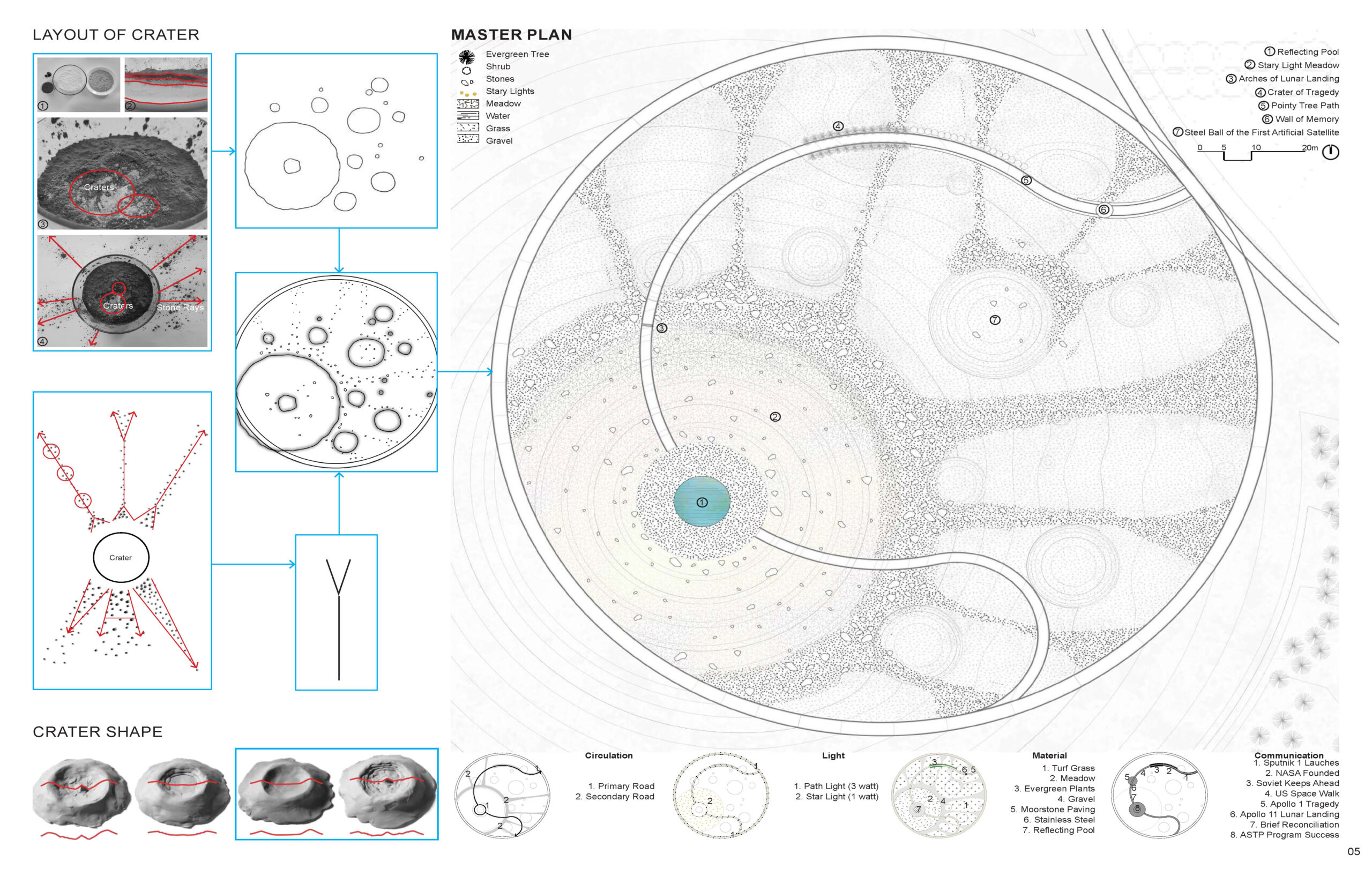
We interpret the Space Race through eight emotional experiences, forming a narrative that traces how the United States ultimately surpassed the Soviet Union in space exploration. Each stage is expressed through distinct spatial language and materiality. The pivotal milestone of the Space Race—the Apollo lunar landing—serves as the primary inspiration for the design. Landforms and stone arrangements are shaped to evoke lunar craters, while the experiential path moves across and cuts into the terrain, guiding visitors through the emotional sequence.
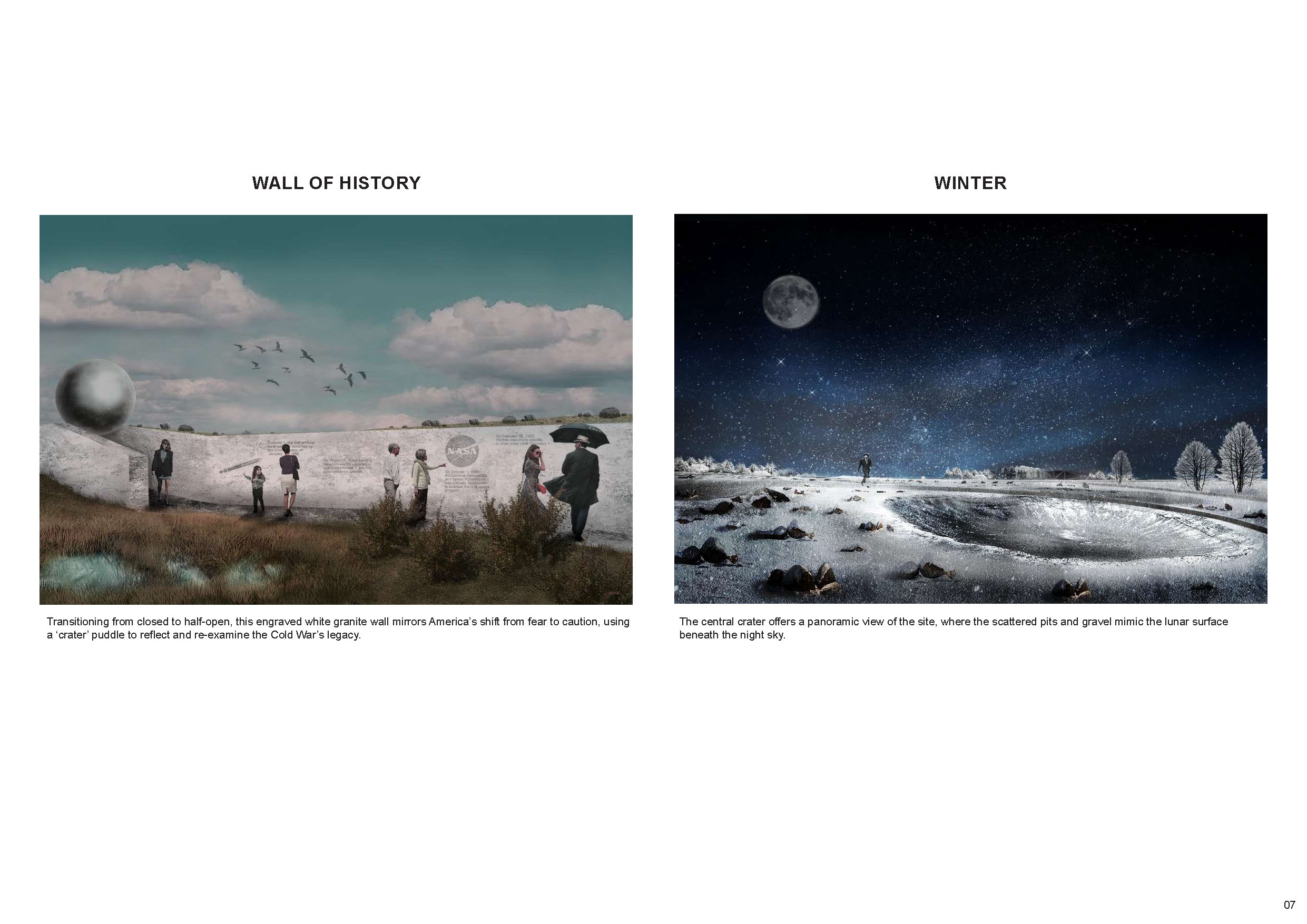
A Wall of History presents the chronological narrative of the Space Race. Vegetation transitions from closely mowed grass to flourishing meadow landscapes beneath the arches marking the moment of lunar landing. A reflecting pool draws the moon and sky down to the ground, reinforcing the connection between earth and space.
The design also responds to the climate of Wisconsin, intentionally embracing seasonal transformation. In winter, snow-covered landforms and sparse vegetation create a quiet, desolate atmosphere that reflects the tension and isolation associated with the Cold War era.
AUTHOR
Xiyu Wang, Zheming Zhang